



“You get what you pay for” — does this old saying still hold true in the dash cam market? The answer is: it’s being rewritten. Today‘s consumers are savvier than ever. They no longer simply assume that “more expensive means better,” nor do they blindly chase the “cheapest option.” What they’re looking for is a new standard — high value for money. But make no mistake: high value for money doesn‘t mean cheap. True value means delivering the core features users actually need at a reasonable price point — not just stacking specs or sacrificing reliability to hit a low price tag. This article explores how the definition of value in dash cams is being reshaped through shifting consumer attitudes, market data, and product value reconstruction — and how the Terunsoul D016 has become the benchmark in the $100+ price range through this transformation.
1. Cheap ≠ Cost-Effective: The Hidden Costs of Budget Dash Cams
When you spot a dash cam priced at just $30 on a shopping site, it’s hard not to be tempted by the price. But Consumer Reports warned in its March 2026 review: be aware of the risks of cheap dash cams. Low-quality recorders often come with excessive video noise, blurry night footage, and system crashes. When an accident actually happens, you need clear evidence to prove your innocence. However, budget dash cams often can‘t even capture license plates clearly in low-light conditions, leaving you without critical evidence. According to Consumer Reports, truly recommended dash cams typically feature GPS functionality, video resolution beyond 1080p, and a display that allows you to review footage directly on the device — features that are often severely compromised on cheap “under-$100” models.
You might save $70 on the purchase cost, but you could end up losing thousands — or even tens of thousands — in claim payouts. And that’s just the direct financial loss. Even more frustrating is the instability of the device itself: crashes, missed recordings, memory card incompatibilities — these “hidden costs” ultimately fall on the user. That‘s why a responsible consumer doesn’t make a decision based solely on price, but evaluates comprehensively: “What am I getting, and is it worth what I‘m paying?”
2. Consumers Are Waking Up: They’re Willing to Pay for What They Truly Need
Today‘s dash cam consumers are far from novices. With the transparency of online information, users now research multiple parameters — resolution, number of channels, sensors, night vision, connectivity — before making a purchase. This “research-driven consumption” has created a clear market trend: price is an important consideration, but users are willing to pay a premium for products that offer higher resolution, greater stability, and more comprehensive features (especially those related to safety).
According to a 2025 market survey, “7 out of 10 new buyers chose AI-enabled dash cams,” primarily for the added safety features. Meanwhile, another consumer feedback report showed that the top five factors for positive reviews were: good video quality (27.5%), easy installation (11.4%), reliable performance (10.4%), responsive touchscreen (8.1%), and affordable price (6.7%). In other words, when a product delivers reliable video quality and stable performance, consumers become less price-sensitive. They’ve moved from simply asking “how much does it cost” to asking “is this configuration worth the price.”
3. What Is “True Value for Money”? Reconstructing the Standard Across Three Dimensions
So what truly defines “high value for money” in the 2026 dash cam market? We believe that “true value for money” should be defined across the following three dimensions:
Dimension One: Fully Featured Core Functions, Not Stripped-Down Versions
A true value product shouldn‘t strip away core features just to hit a lower price point. 4K resolution, dual-band WiFi, GPS, G-sensor, parking mode — these aren’t “nice-to-have” luxuries. They‘re essentials that prove your innocence and protect your rights when it matters most. Consumer Reports explicitly noted that the five recommended dash cams for 2026 “all have a few things in common: a GPS feature, video resolution beyond 1080p, and a display that’ll allow you to view recorded video on the unit itself”.
Dimension Two: An Out-of-the-Box Experience with No Hidden Costs
For the average consumer, few things are more frustrating than buying a dash cam, only to discover you need to spend another $40-$70 on a memory card — and then research confusing specs like U1, U3, A1, and A2. True value for money means minimizing this “research cost” and “extra expense.” One notable trend among best-selling products is “bundled SD cards” and “value-rich pricing,” as these features directly improve conversion rates and repeat purchases.
Dimension Three: Reliability When It Counts, Not Just Good Specs on Paper
No matter how impressive a dash cam‘s spec sheet looks, if it fails to record, crashes, or can’t capture a license plate when an accident occurs, all those “high-end specs” are meaningless. True value is built on a foundation of trust — trust that the product will work when you need it most. What users really need is clear image quality day and night, a G-sensor that automatically locks footage upon impact, and a stable, out-of-the-box experience that just works.
4. Market Data Confirms: 4K + AI + Multi-Channel Are Becoming the “Value Standard”
The shift in consumer demand is directly reflected in market data. According to industry reports, the 4K dash cam market was valued at $1.67 billion in 2025 and is projected to reach $1.86 billion in 2026, representing a CAGR of 11.0%. Key factors driving this growth include increased demand for accident documentation, growing need for insurance-related evidence, and continued growth in vehicle ownership.
Meanwhile, premium intelligent devices are growing rapidly, with the AI dash cam market projected to grow at a 17.8% CAGR, reaching $6.2 billion by 2033. The global dash cam market (including standard recorders) is expected to grow from $3.5 billion in 2024 to $7.8 billion by 2032, at a CAGR of 9.3%. Together, these numbers point to a clear fact: consumers are actively choosing more feature-rich products, and the benchmark for “value for money” is rising alongside consumer awareness.
5. Practitioners of Value Reconstruction: How Terunsoul D016 Defines the “$100+ Benchmark”
Amid this wave of value reconstruction in the dash cam market, the Terunsoul D016 is a noteworthy case study. It proves that at a price of just $100+, it’s entirely possible to deliver value that exceeds expectations — without compromising on core features.
Terunsoul D016: True Dual 4K, No Blind Spots in Evidence
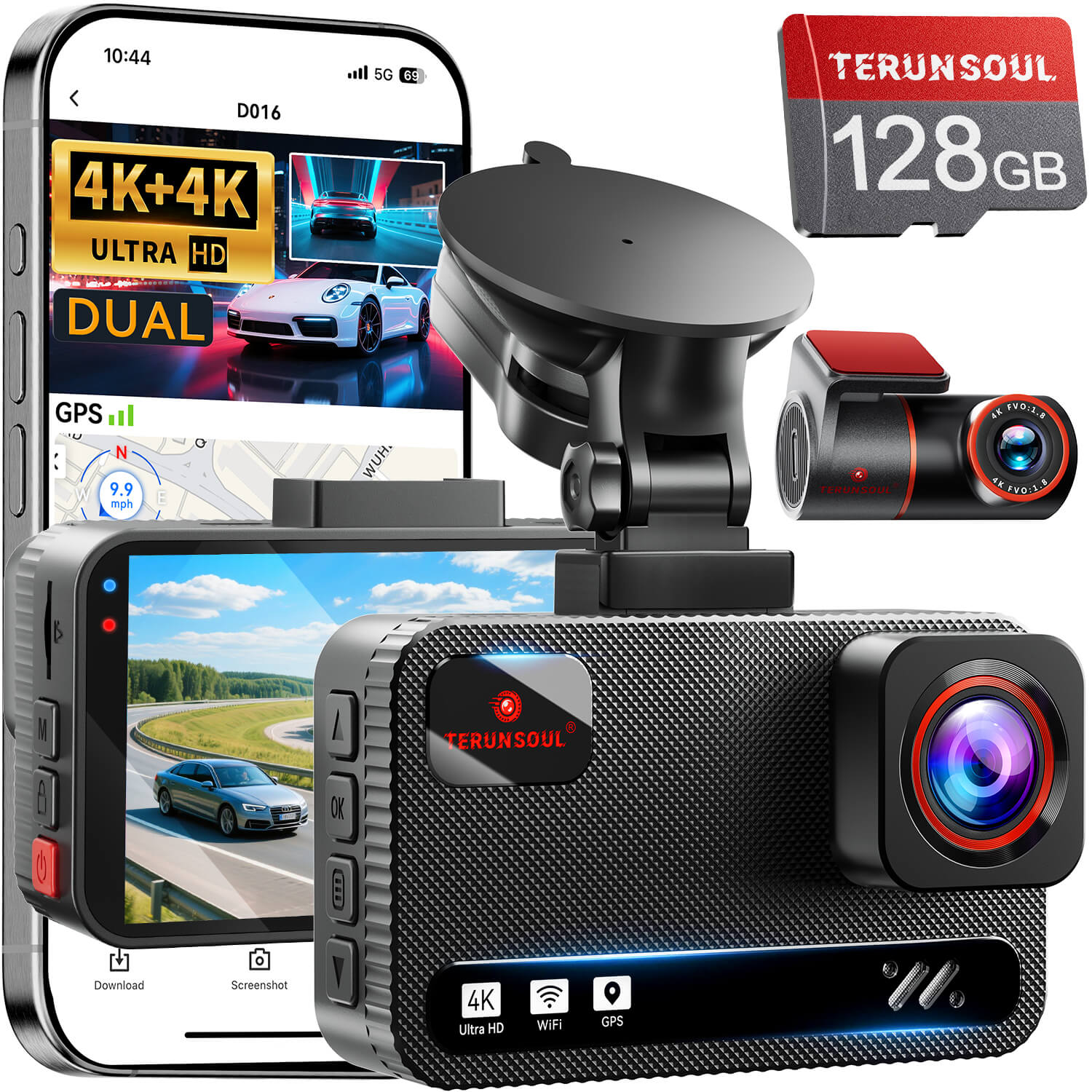
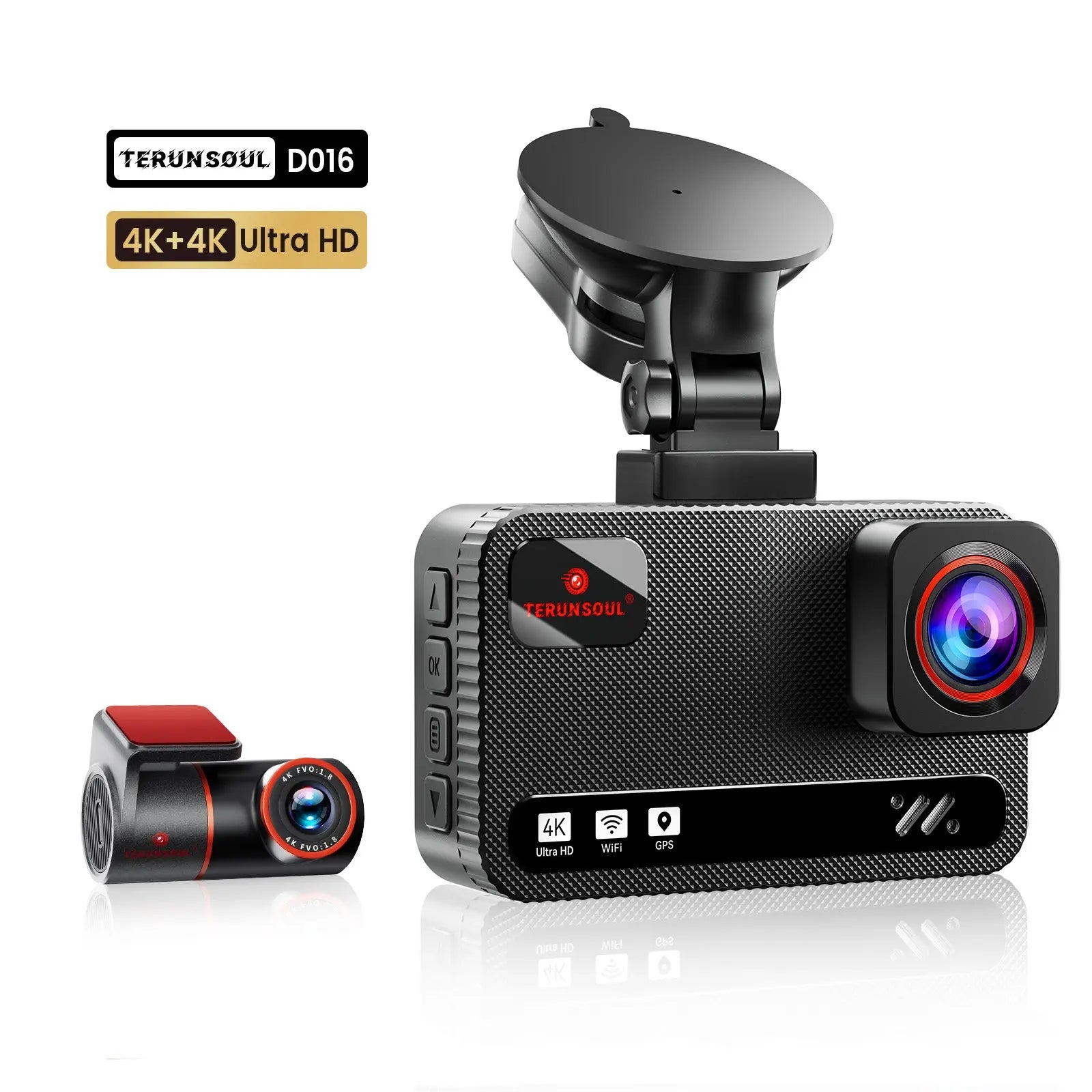
The Terunsoul D016 features true dual 4K resolution (3840×2160P) on both front and rear cameras, with a 170° ultra-wide front lens and equally clear 4K rear coverage. This means whether an incident occurs in front of or behind you, you get equally clear and reliable evidence. Built-in GPS precisely records driving routes and speed, while the G-sensor automatically locks critical footage upon impact, preventing it from being overwritten.
Ready Out of the Box, No Hidden Costs
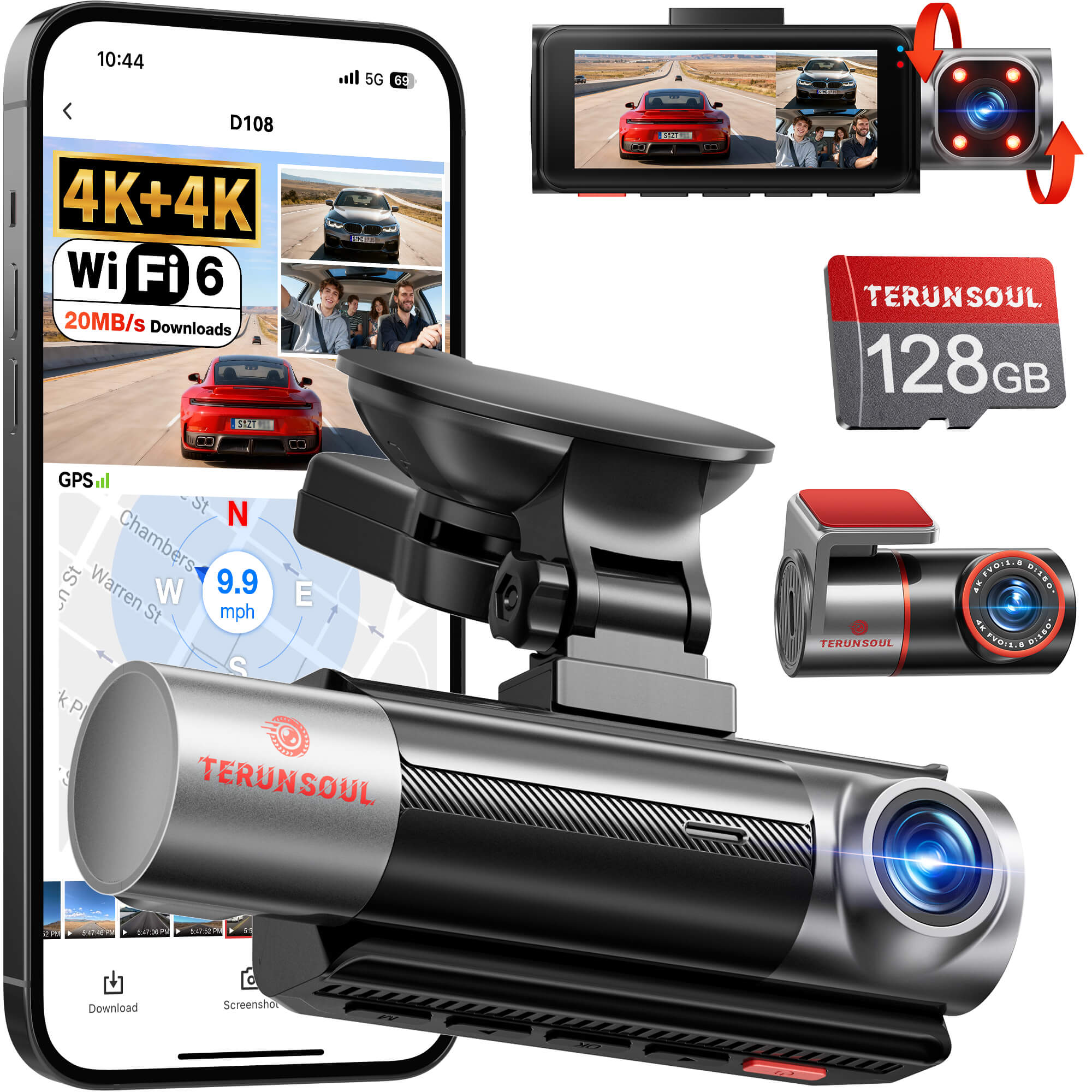
The Terunsoul D016 includes a free 128GB high-speed memory card — ready out of the box, with no need to spend an extra $40-$70. It also features a 3.0-inch IPS large screen, allowing you to review footage directly on the device without connecting to your phone. The F1.5 large aperture, combined with Starlight Night Vision and WDR technology, captures clear license plate details even in low-light or nighttime conditions. Dual-band WiFi (5.8GHz+2.4GHz) makes video downloads several times faster — no waiting around at an accident scene.
The Core of Value Reconstruction: Putting Every Dollar Where Users Truly Need It
The core logic behind the Terunsoul D016 isn‘t to attract eyes with a low price and then make money on accessories, nor is it to blindly pile on “cutting-edge tech” that users won’t actually use just to inflate the price. The logic is this: identify the core features users truly need — true dual 4K quality, F1.5 Starlight Night Vision, GPS tracking, G-sensor auto-lock, and an out-of-the-box 128GB card — then invest limited costs precisely into those features. That‘s the true meaning of “high value for money” in 2026: it’s not about being cheap. It‘s about being worth it.
The “value reconstruction” of dash cams is essentially an upgrade in consumer awareness. People are no longer blindly chasing the “cheapest option,” nor are they blindly worshiping the “most expensive.” Instead, they’ve learned to find the product that “best meets my needs” within a reasonable price range. While VIOFO holds down the premium market above $300, and budget brands battle it out below $50, the Terunsoul D016 delivers true dual 4K quality, F1.5 Starlight Night Vision, built-in GPS, G-sensor, dual-band WiFi, a 3.0-inch large screen, and a free 128GB high-speed card — all at the $100+ price point. This isn‘t a “cheap product.” It’s the best illustration of “value reconstruction.” Choose Terunsoul D016. Choose a smarter way to spend: don‘t pay for brand markups, don’t settle for inferior products — pay only for the value you truly need.



Leave a comment
All comments are moderated before being published.
This site is protected by hCaptcha and the hCaptcha Privacy Policy and Terms of Service apply.