


A car accident can happen in seconds, even when you are driving carefully. One moment you are on your way to work, taking your kids to school, or heading home after a long day — and the next moment, you are dealing with a collision, damaged vehicles, and a lot of uncertainty.
After an accident, many drivers feel stressed and unsure about what they should do first. Should you move your vehicle? Should you call the police? What information should you collect? How can you protect yourself if there is a disagreement about who was responsible?
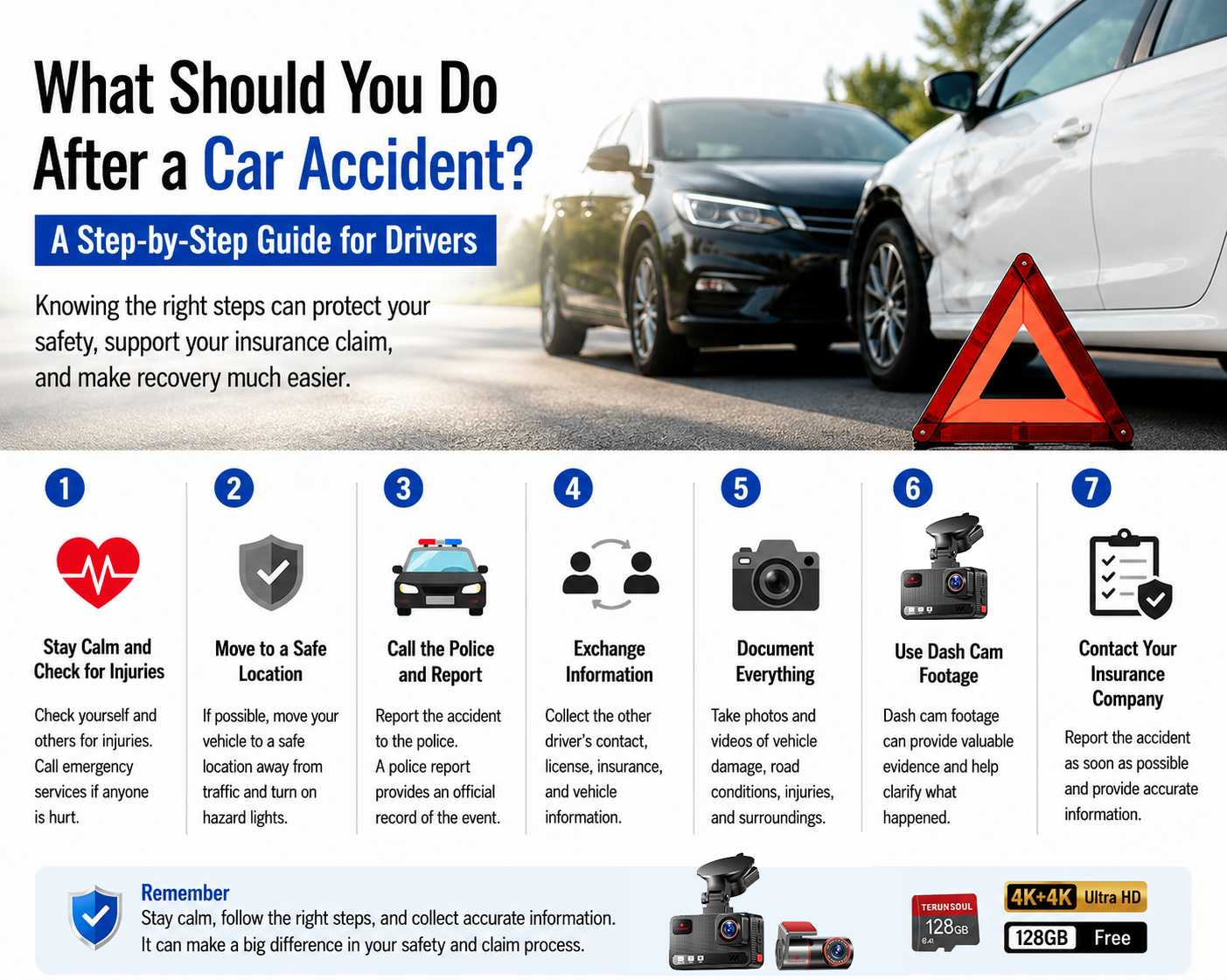
Knowing the right steps to take after a crash can help protect your safety, support your insurance claim, and make the recovery process much easier.
This guide explains exactly what you should do after a car accident, from the first few seconds at the scene to dealing with insurance afterward.
1. Stay Calm and Check for Injuries
The first thing to do after a car accident is to stay calm and check whether anyone is injured.
Take a moment to breathe and assess the situation:
-
Are you or your passengers hurt?
-
Is anyone in the other vehicle injured?
-
Is your vehicle in a dangerous position?
-
Is there any immediate danger, such as fire, leaking fuel, or heavy traffic?
Even if you feel fine immediately after a crash, remember that some injuries may not appear right away. Symptoms such as neck pain, headaches, dizziness, or muscle soreness can develop hours or even days later.
If anyone is seriously injured, avoid moving them unless there is an immediate safety risk. Call emergency services and wait for professional help.
Your safety should always come before collecting information or discussing responsibility.
2. Move to a Safe Location If Possible
If the accident is minor and your vehicle can still be driven, move it to a safe location away from moving traffic.
A safer location can help prevent:
-
Additional collisions
-
Traffic hazards
-
Further vehicle damage
-
Risk to passengers standing near the road
Turn on your hazard lights to alert other drivers.
However, if moving your vehicle could make the situation worse or if someone is seriously injured, leave the vehicles where they are and wait for emergency responders.
Different states may have different requirements about moving vehicles after a crash, so always follow local laws and police instructions.
3. Call the Police and Report the Accident
Even if the accident appears minor, contacting the police is often a good idea.
A police report can provide an official record of:
-
When and where the accident happened
-
The vehicles involved
-
Statements from drivers and witnesses
-
Officer observations of the scene
This information can become valuable if there is a disagreement later with the other driver or an insurance company.
When speaking with the police:
-
Explain what happened clearly
-
Provide accurate information
-
Avoid guessing or making assumptions
-
Do not admit fault at the scene
Simply describe the facts:
“I was traveling north on this road when the collision happened.”
is better than saying:
“I probably caused the accident.”
Let the investigation determine responsibility.
4. Exchange Information With the Other Driver
After making sure everyone is safe, exchange important information with the other driver.
You should collect:
-
Full name
-
Phone number
-
Driver’s license information
-
Insurance company and policy number
-
Vehicle make, model, and license plate number
Remain polite and professional during the conversation.
Avoid arguments about who caused the accident. Emotions can run high after a crash, and statements made in the moment can sometimes create problems later.
If the other driver refuses to provide information, becomes aggressive, or leaves the scene, contact the police immediately.
5. Document Everything at the Accident Scene
Evidence collected immediately after an accident can become extremely important.
Before leaving the scene, take photos and videos of:
Vehicle Damage
Capture:
-
All damaged areas of your vehicle
-
Damage to the other vehicle
-
License plates
-
Broken parts or debris
Accident Location
Take pictures of:
-
Road conditions
-
Traffic signs
-
Traffic lights
-
Lane markings
-
Weather conditions
-
Nearby objects that may have affected visibility
Injuries and Surroundings
If appropriate, document:
-
Visible injuries
-
Skid marks
-
Vehicle positions
-
Any factors that may explain what happened
The more information you have, the easier it becomes to explain the accident later.
6. Why Dash Cam Footage Can Be Valuable After an Accident
One of the biggest challenges after a car accident is determining exactly what happened.
Drivers may remember events differently. Witnesses may not always be available. In some cases, there may be disagreement about who had the right of way or who caused the collision.
This is where dash cam footage can provide valuable evidence.
A dash cam can record:
-
The moments before impact
-
Traffic conditions
-
Vehicle movements
-
Road hazards
-
Driver behavior
Video evidence can help provide a clearer picture of what happened and may support your conversation with insurance companies or authorities.
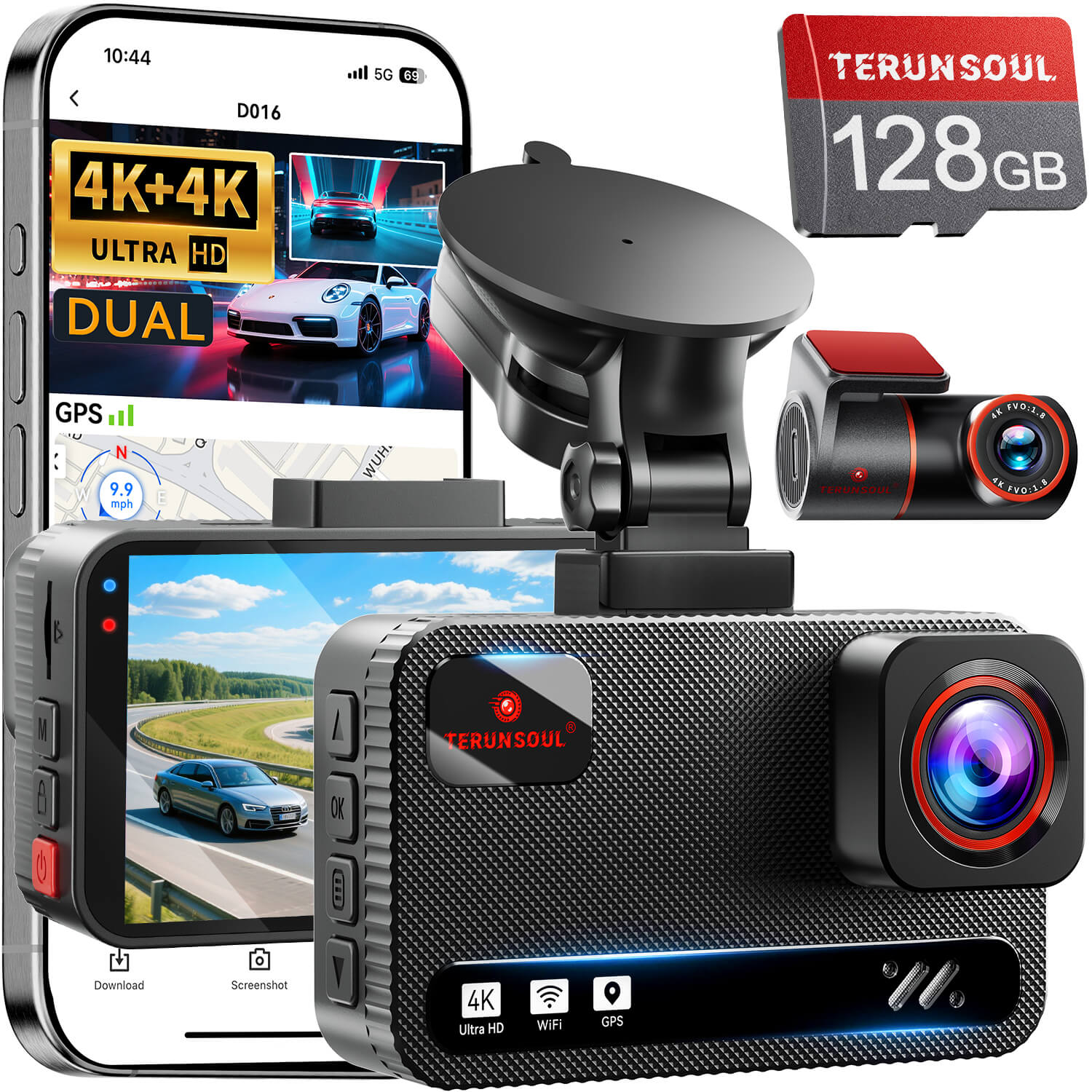
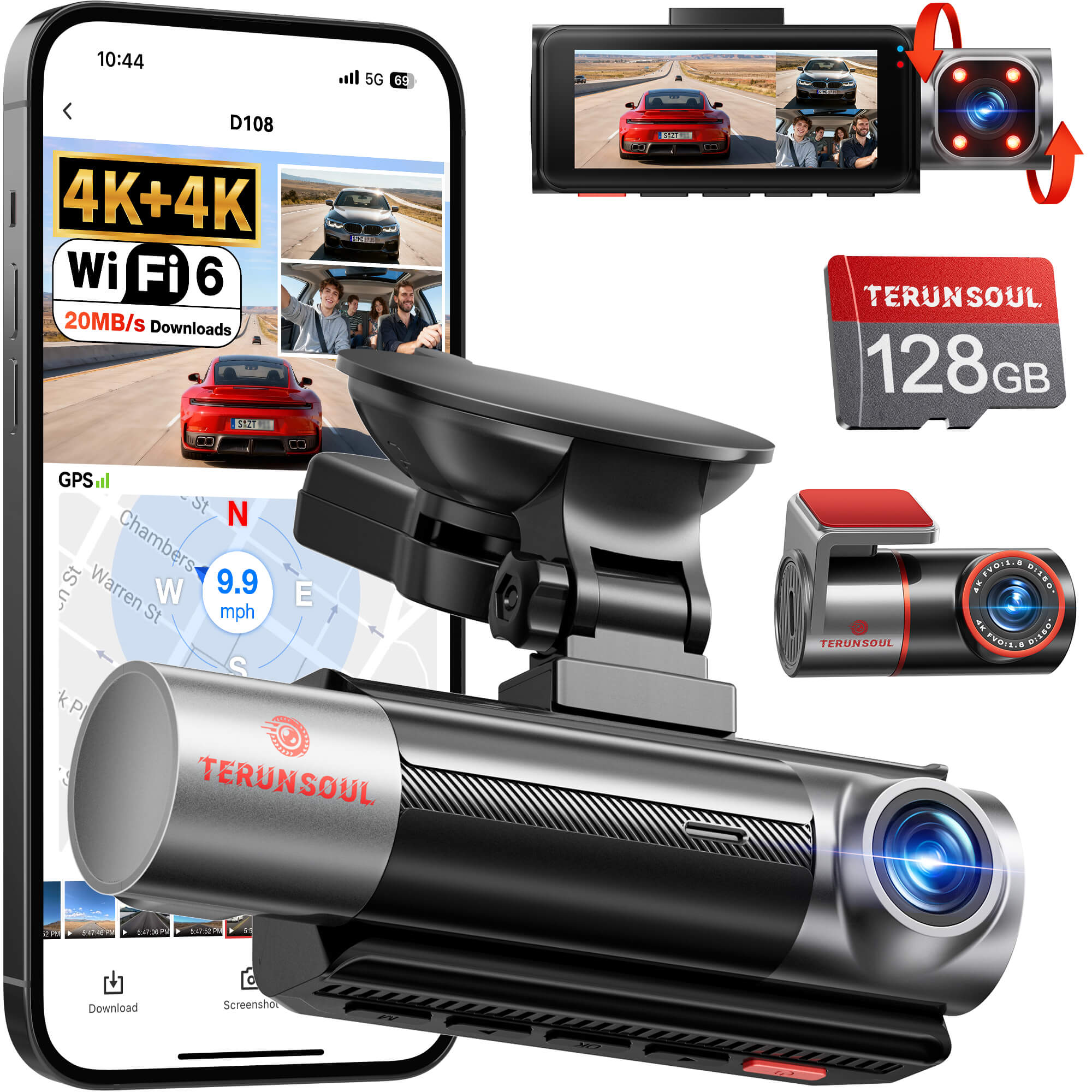
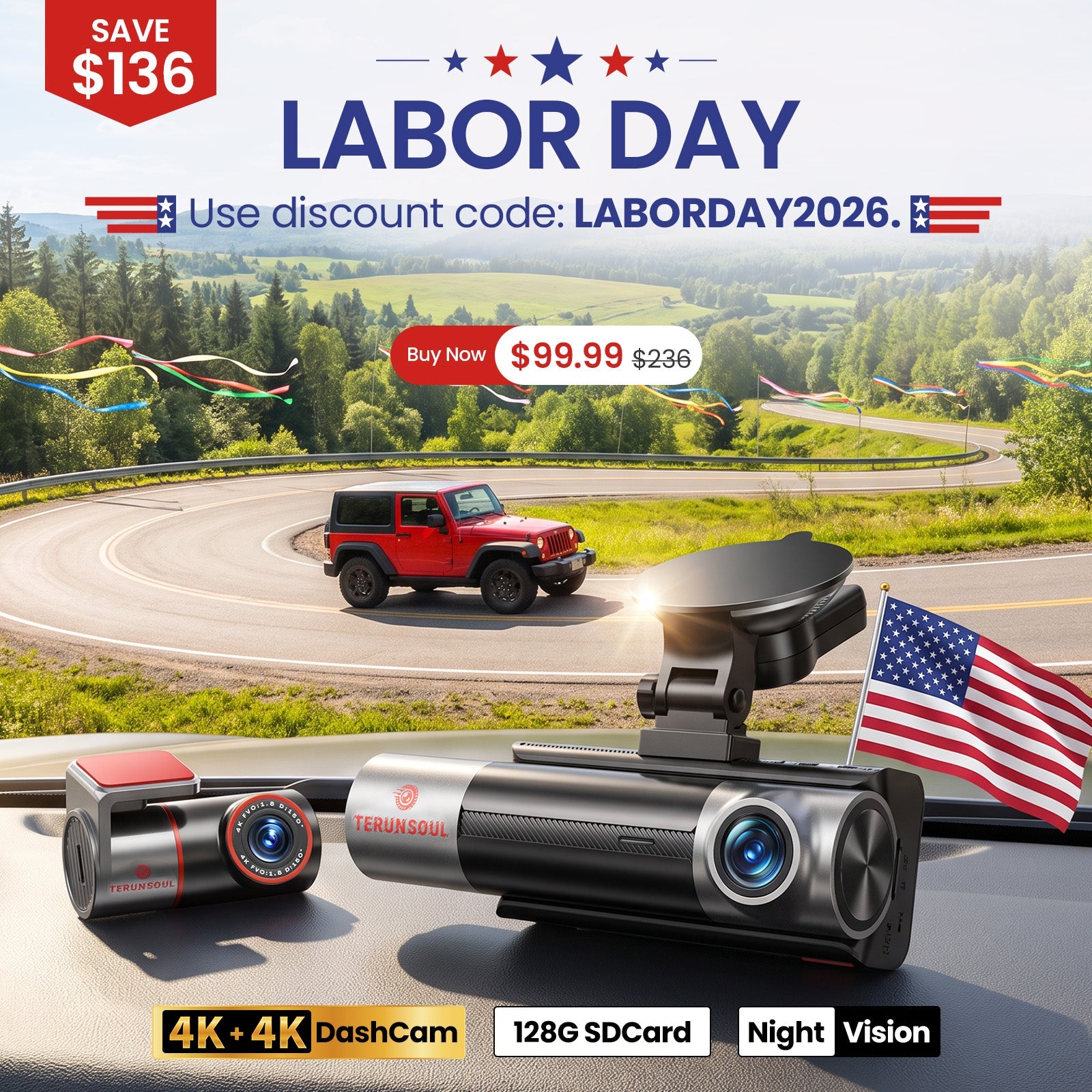
Modern dash cams with features such as high-resolution recording, wide-angle lenses, night vision, and parking monitoring can help capture important details in different driving situations.
However, drivers should remember that a dash cam is a tool for recording events — it does not replace safe driving or proper accident procedures.
7. Contact Your Insurance Company
After leaving the accident scene, one of the next important steps is contacting your insurance company.
Most insurance providers recommend reporting accidents as soon as possible, even if the damage appears minor.
When contacting your insurer, prepare the information you collected:
-
Date and time of the accident
-
Location of the collision
-
Information about the other driver
-
Photos and videos from the scene
-
Police report number (if available)
-
Dash cam footage, if you have it
Your insurance company may ask you questions about what happened. Try to provide clear and factual information.
Avoid making statements about fault before the investigation is complete. Insurance companies review multiple factors, including:
-
Vehicle damage
-
Police reports
-
Witness statements
-
Photos and videos
-
Available evidence
The goal is to provide accurate information and allow the investigation process to determine responsibility.
8. Save and Protect Your Accident Evidence
After a collision, protecting your evidence is just as important as collecting it.
Many drivers make the mistake of assuming that photos alone are enough. However, additional evidence can sometimes make a significant difference.
Important files to save include:
-
Dash cam video clips
-
Photos from the accident scene
-
Repair estimates
-
Medical records
-
Insurance communication
-
Police documents
If your dash cam recorded the accident, save the footage immediately.
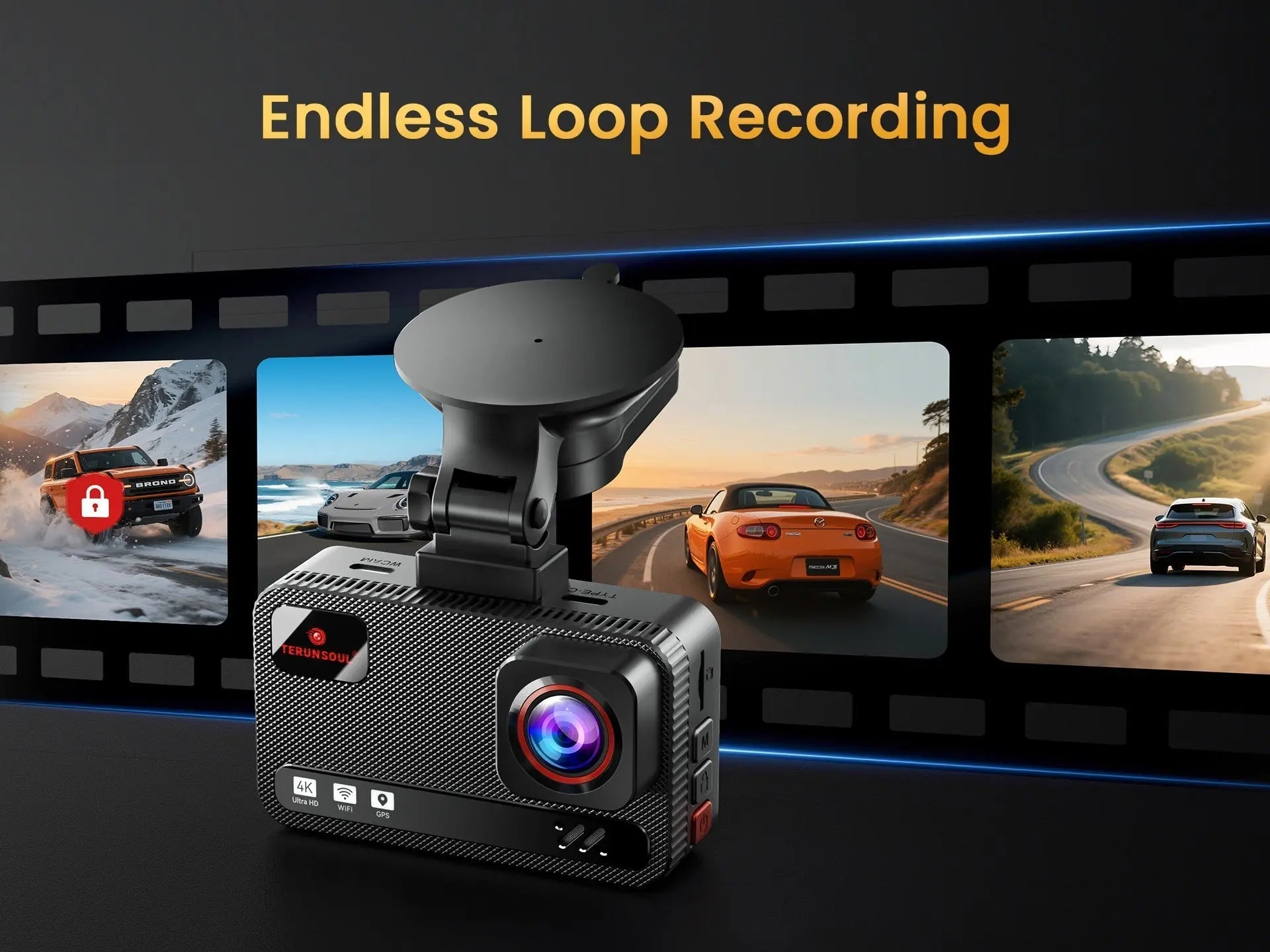
Many dash cameras use loop recording, which means older videos can eventually be overwritten when the memory card becomes full.
To protect important footage:
-
Stop driving if possible after the incident
-
Remove the memory card or lock the video file
-
Back up the footage to another device
-
Keep the original recording
Having a clear record of events can help avoid confusion later.
9. Common Mistakes to Avoid After a Car Accident
Even careful drivers can make mistakes after a collision. Knowing what not to do can help protect your rights and avoid unnecessary problems.
Mistake 1: Leaving the Scene Too Quickly
Leaving before exchanging information or speaking with authorities can create legal problems depending on the situation and local laws.
Always make sure required steps are completed before leaving.
Mistake 2: Admitting Fault Immediately
After an accident, many people automatically say things like:
-
“It was my fault.”
-
“I should have been paying attention.”
-
“I’m sorry, I caused this.”
While being polite is important, avoid making conclusions about responsibility before all facts are reviewed.
A simple apology or emotional statement can sometimes be misunderstood.
Mistake 3: Not Taking Enough Photos
Many drivers only photograph vehicle damage and forget the surrounding environment.
The accident scene can change quickly after vehicles are moved.
Photos of road conditions, signs, traffic patterns, and vehicle positions may become important later.
Mistake 4: Delaying Insurance Reporting
Waiting too long to report an accident may complicate the claims process.
Contact your insurance provider and follow their instructions as soon as reasonably possible.
Mistake 5: Forgetting About Dash Cam Footage
If your vehicle has a dash camera, do not assume the footage is automatically saved forever.
Loop recording systems continuously replace older files, so important recordings should be backed up quickly.
Frequently Asked Questions About What to Do After a Car Accident
Should I call the police after a minor car accident?
It depends on the situation and local requirements.
You should consider contacting the police if:
-
Someone is injured
-
There is significant vehicle damage
-
The other driver refuses to cooperate
-
You suspect unsafe or illegal behavior
-
There is disagreement about what happened
A police report can provide an official record of the incident.
What information should I collect after a car accident?
You should collect:
-
Driver’s name
-
Phone number
-
Insurance information
-
Vehicle details
-
License plate number
-
Photos of the scene
-
Witness contact information if available
The more information you collect, the easier it will be to handle insurance and repairs.
Can dash cam footage help with an insurance claim?
Yes, dash cam footage can be useful because it provides a visual record of what happened.
Video evidence may help show:
-
Traffic conditions
-
Vehicle movements
-
Timing of events
-
Road conditions
However, insurance decisions depend on the complete investigation, not only one piece of evidence.
How long should I keep dash cam footage after an accident?
You should keep accident footage until your claim, repairs, or any legal process has been completed.
It is recommended to create a backup copy so the original file is not accidentally deleted or overwritten.
What if the other driver says the accident was my fault?
Avoid arguing at the scene.
Instead:
-
Exchange information
-
Take photos
-
Collect evidence
-
Contact your insurance company
-
Allow the investigation process to determine responsibility
Having objective evidence, such as photos, witness statements, or dash cam footage, can help clarify what happened.
What should I do if someone hits my parked car?
If your parked vehicle is damaged:
-
Check for a note from the other driver
-
Take photos of the damage
-
Look for nearby cameras or witnesses
-
Report the incident if necessary
-
Check whether your dash cam captured the event
Parking mode features on dash cams can help monitor vehicles even when the owner is away.
Do dash cams record accidents automatically?
Many modern dash cams include a G-sensor that detects sudden impacts.
When a collision occurs, the camera can automatically protect the current video file from being overwritten.
However, drivers should still verify important footage after an accident and create backups.
Final Thoughts: Be Prepared Before an Accident Happens
No driver expects to be involved in a car accident, but preparation can make a stressful situation much easier to handle.
The most important steps are:
-
Stay safe
-
Contact emergency services when needed
-
Document the accident
-
Exchange information
-
Protect your evidence
-
Work with your insurance company
A dash cam is not only a device that records your daily drives. It can become an important tool for protecting yourself when unexpected situations happen on the road.
With reliable recording, clear video evidence, and features designed for real-world driving conditions, a quality dash cam can help drivers feel more confident every time they get behind the wheel.
Whether you are commuting, taking a road trip, or simply driving around town, being prepared is one of the best ways to protect yourself and your vehicle.
Drive safer. Stay prepared. Protect every journey.
TERUNSOUL is committed to creating reliable dash cam solutions that help drivers capture important moments on the road and have greater confidence behind the wheel.

Leave a comment
All comments are moderated before being published.
This site is protected by hCaptcha and the hCaptcha Privacy Policy and Terms of Service apply.