
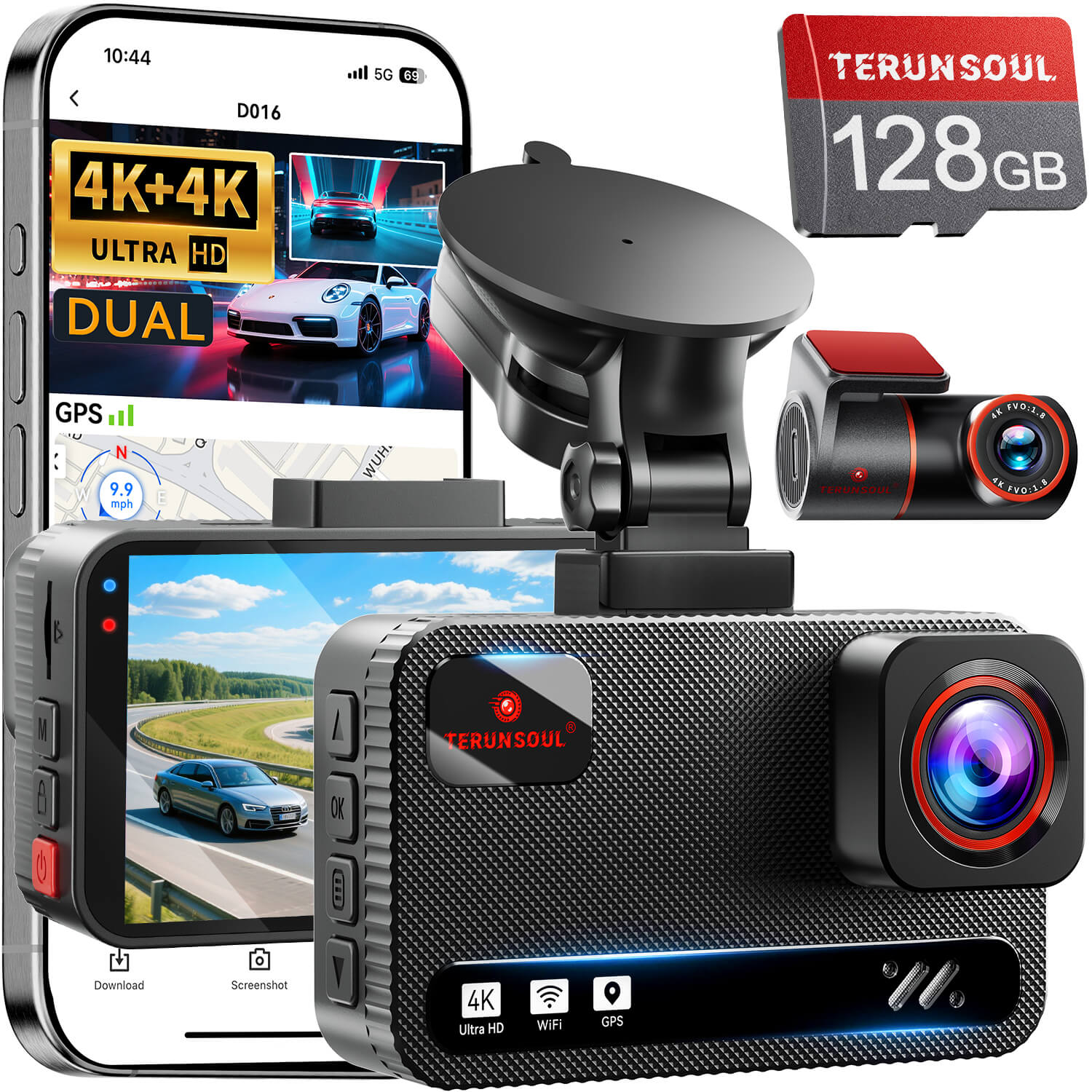

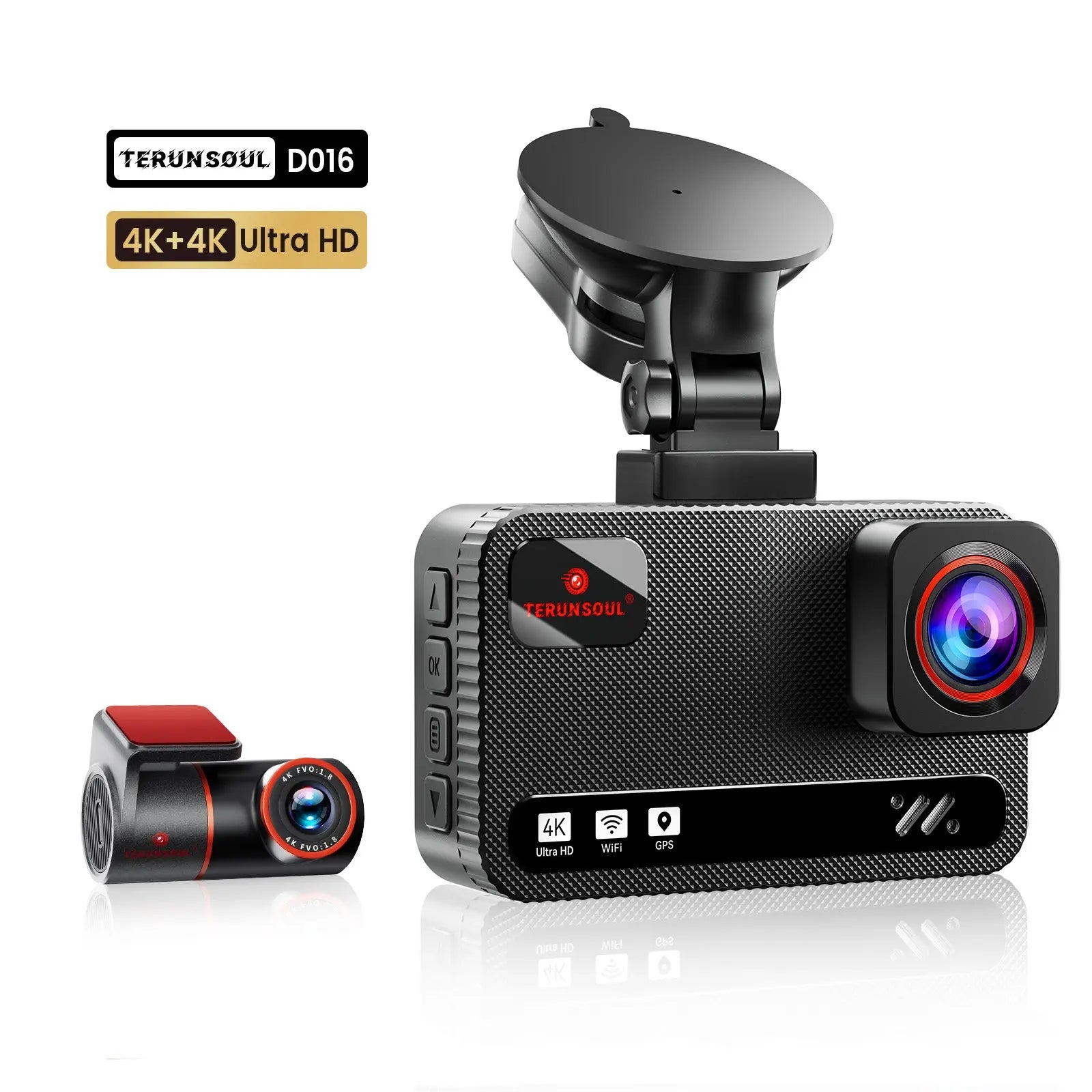

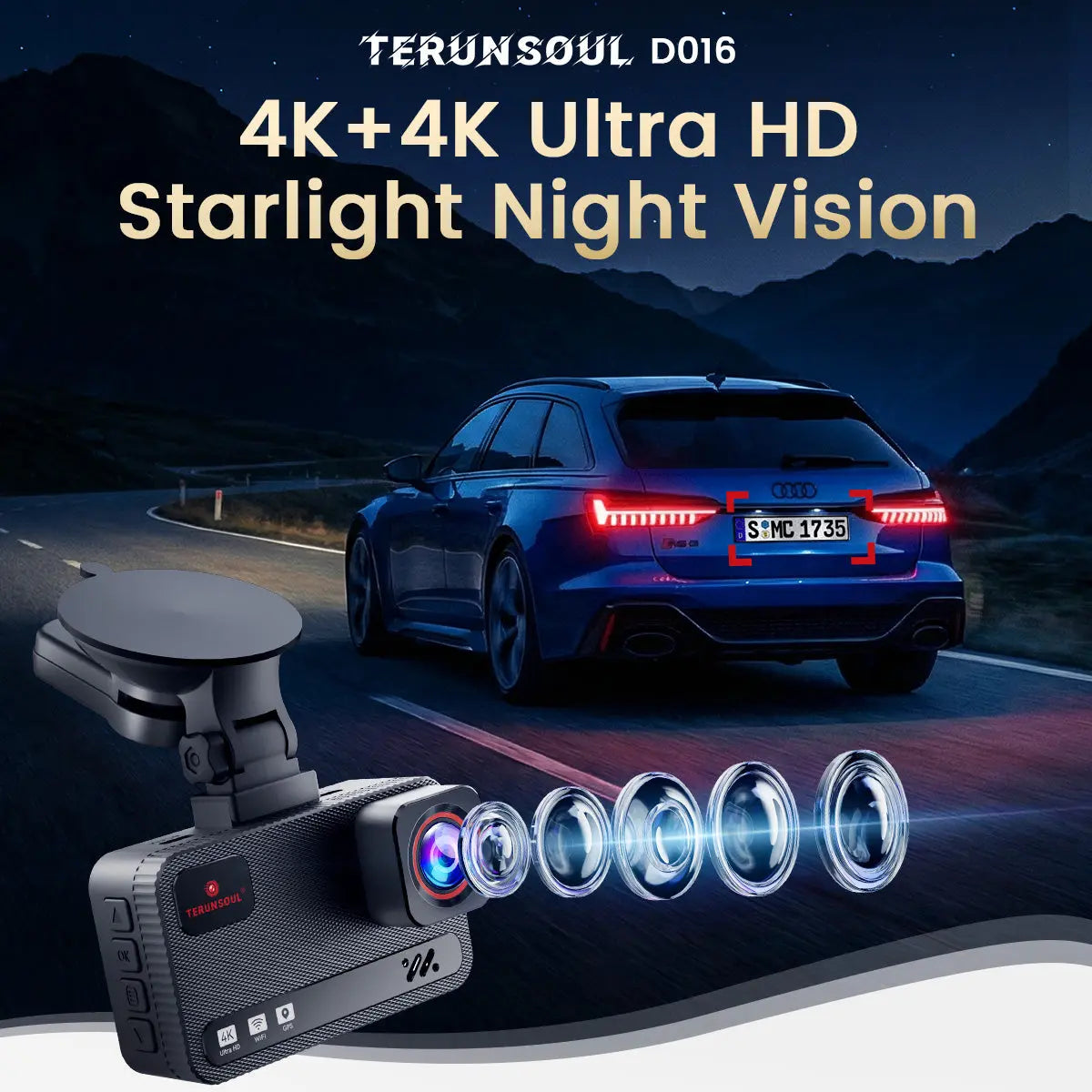
Dash cam spec sheets are filled with terms like “F1.5 aperture,” “Sony sensor,” “WDR wide dynamic range,” and “dual-band Wi-Fi.” What do these terms actually mean? Do they really affect image quality, or are they just marketing buzzwords? Today, I’ll use the Terunsoul D016 True Dual 4K Dash Cam as an example to break down these core technologies in plain language, showing you which specs truly matter and which are just “nice to have.”
1. Aperture: What Does F1.5 Really Mean?
Aperture is the opening in a lens that controls how much light enters. It’s expressed as an “F” number. The smaller the number, the larger the aperture, and the more light enters. An F1.5 aperture is larger than F2.0, allowing more light in low-light conditions. That’s why the Terunsoul D016 can capture bright, clear footage even in dark environments like nighttime roads or parking garages.
Real-world value: A larger aperture means stronger night vision capability. When you’re driving on unlit country roads or dealing with an incident in a parking garage, the F1.5 aperture allows you to see license plates, road signs, and obstacles clearly—not just a blurry mess of noise.
2. WDR Wide Dynamic Range: Why Can You Still See the License Plate When Headlights Hit?
WDR (Wide Dynamic Range) is an image processing technology that preserves details in both the brightest and darkest parts of an image simultaneously. Without WDR, when an oncoming car’s headlights hit your dash cam at night, the license plate gets “washed out” into a white blur. The Terunsoul D016’s built-in WDR intelligently balances exposure, ensuring license plates remain readable even under bright lights.
Real-world value: In an accident, the license plate is often the key piece of evidence. WDR technology ensures that whether you’re driving into the sun during the day or facing oncoming headlights at night, you capture the other vehicle’s plate—not a useless video of light flares.
3. Resolution: True Dual 4K Front & Rear—Why Is It 4x Better Than “Front 4K + Rear 1080P”?
4K resolution (3840x2160) has four times the pixel count of 1080P (1920x1080). This means, at the same distance, a 4K image captures four times the detail. Many brands advertise “4K dash cams” but only have a 4K front camera—the rear is just 1080P. The Terunsoul D016 insists on true dual 4K front and rear, ensuring equally clear evidence whether an incident occurs in front or behind you.
Real-world value: When you’re rear-ended, the rear camera’s clarity directly determines whether you can see the other car’s license plate, model, and driver characteristics. 1080P can become blurry in low light, while 4K preserves critical details. For just $100+, Terunsoul gives you consistent “evidence-grade” quality from both cameras.
4. Dual-Band Wi-Fi: Why Is 5.8GHz Several Times Faster Than 2.4GHz?
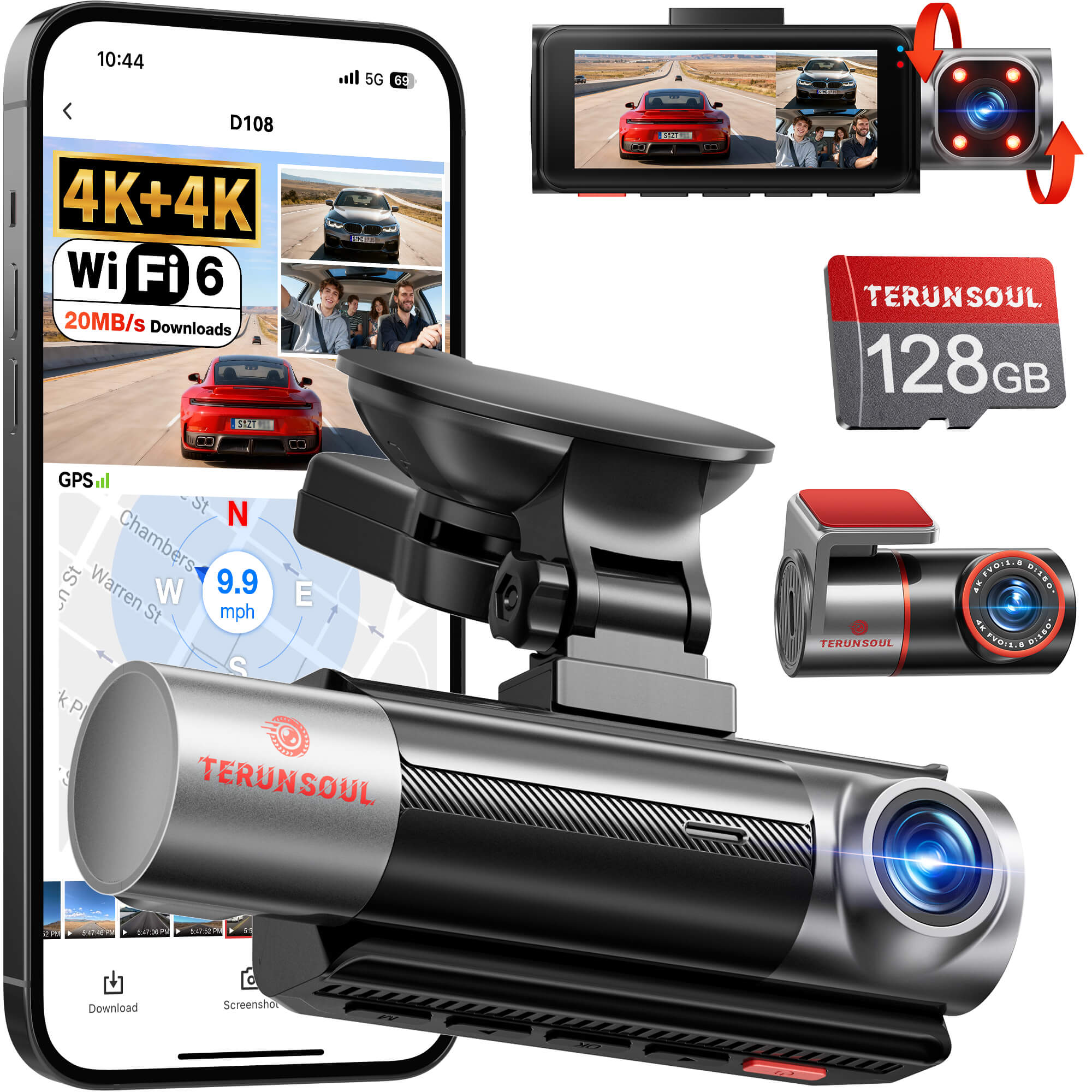
Wi-Fi frequency determines data transfer speed. The 2.4GHz band has wider coverage but slower speeds; the 5.8GHz band is significantly faster but has slightly weaker wall penetration. The Terunsoul D016 supports dual-band Wi-Fi, automatically selecting the optimal frequency. In real-world tests, downloading a one-minute 4K video on 5.8GHz takes just tens of seconds—on 2.4GHz, it could take several minutes.
Real-world value: At an accident scene, time is everything. You need to download footage to your phone quickly to show police or insurance adjusters. Dual-band Wi-Fi eliminates the frustration of “can’t connect” or “download taking forever,” letting you provide evidence when it matters most.
5. GPS: Recording Speed and Route—Why Does It Strengthen Your Insurance Claim?
A dash cam with built-in GPS embeds driving route, speed, and time information directly into the video. The Terunsoul D016’s GPS data can be displayed in video players like Google Earth. If you’re falsely accused of “speeding” or “running a red light,” GPS data becomes your strongest defense.
Real-world value: Insurance companies and courts trust video with metadata. GPS data not only proves your actual speed and location at the time of an incident but also helps determine fault—for example, showing you were in the correct lane, not speeding, or crossing the intersection on a green light.
6. G-Sensor: Why Isn’t Accident Footage Overwritten?
Dash cams typically use loop recording—when the memory card is full, the oldest files are automatically overwritten. But if critical footage gets overwritten, the consequences can be severe. The Terunsoul D016 features a three-axis G-sensor that automatically detects collisions or sudden braking and locks the current video, preventing it from being overwritten.
Real-world value: The G-sensor is your “automatic insurance” after an accident. Even if you don’t have time to manually save footage, the dash cam locks critical evidence automatically. Paired with the 128GB card, you can drive with confidence, knowing your evidence is safe.
7. Memory Card: Why Is a Free 128GB Card More Considerate Than a “Camera-Only” Package?
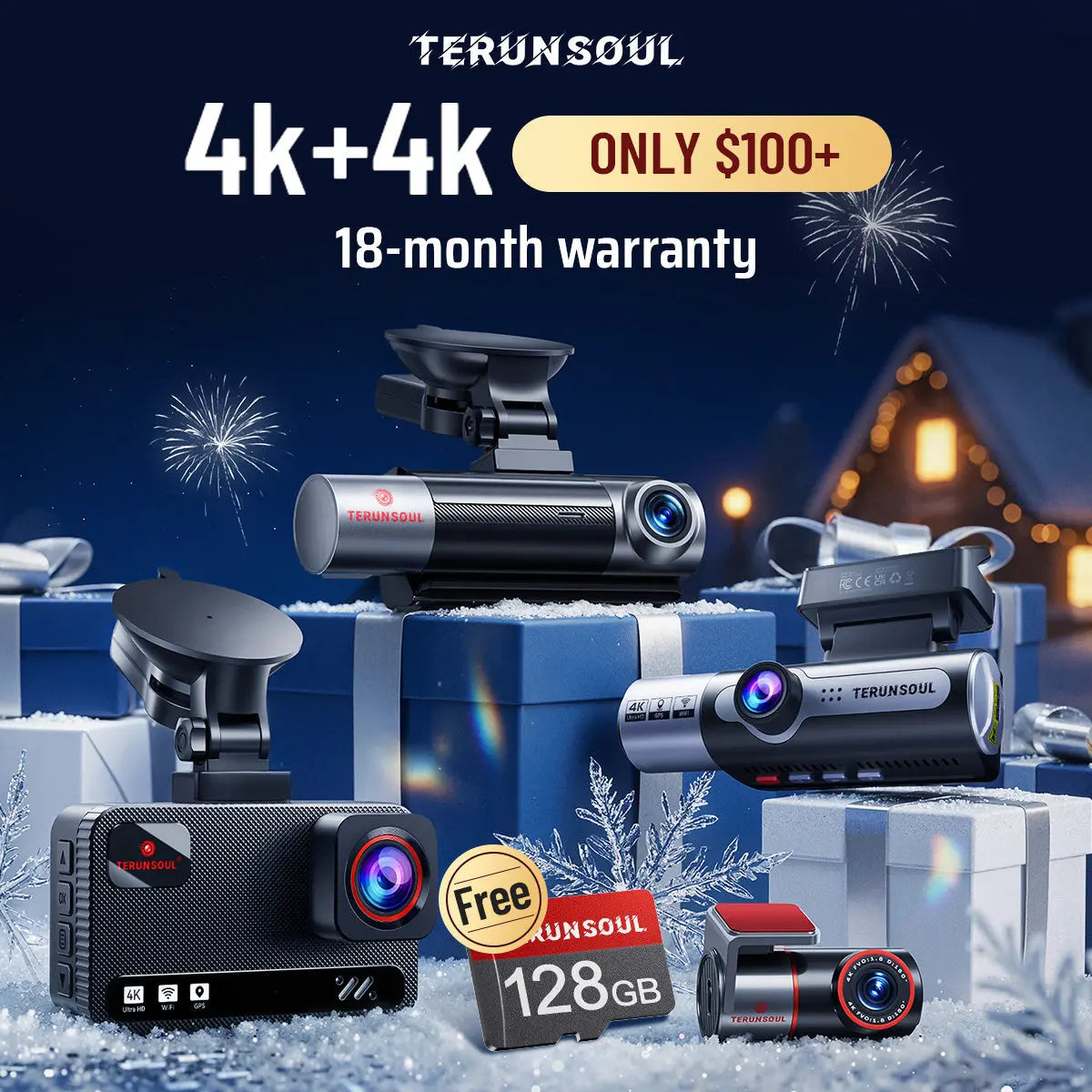
Many brands sell dash cams without a memory card. Users must spend an extra $30–$50 to buy one, research U1, U3, A1, A2 specs, and worry about compatibility issues. The Terunsoul D016 includes a 128GB U3 high-speed, high-endurance card—ready to use out of the box, saving you money and hassle.
Real-world value: The memory card is the dash cam’s “lifeline.” A low-quality card can cause choppy video, lost footage, or even system crashes. Terunsoul not only includes a card but provides a specifically matched high-endurance card, ensuring every video is reliably recorded and never fails when you need it most.
8. Technical Summary: What Makes the Terunsoul D016 a “Tech Expert’s Choice”?
Looking back at this technical breakdown, the Terunsoul D016 refuses to compromise on every core component:
-
F1.5 Large Aperture: Captures more light in low-light conditions for clear night footage
-
WDR Wide Dynamic Range: Preserves license plate details even under bright lights
-
True Dual 4K Front & Rear: Consistent clarity from both cameras, no blind spots in evidence
-
Dual-Band Wi-Fi: Downloads several times faster—no waiting at accident scenes
-
Built-in GPS: Embeds speed and route data into videos for stronger claims
-
G-Sensor: Automatically locks footage upon impact—critical evidence never overwritten
-
Free 128GB Card: Ready to use out of the box—saves money and hassle
9. Conclusion: Technology Isn’t About Showing Off—It’s About Protecting Your Evidence
The core value of a dash cam isn’t about how impressive the spec sheet looks—it’s about whether it protects the truth when it matters most. For just $100+, the Terunsoul D016 packs F1.5 aperture, true dual 4K, WDR, dual-band Wi-Fi, GPS, and G-sensor into one device—and includes a free 128GB card. It’s not a “spec monster”—it’s an “evidence guardian.”
If you’re looking for a dash cam that truly understands technology, users, and evidence, the Terunsoul D016 deserves your serious consideration. Because every drive deserves to be clearly recorded and fairly judged.
Choose Terunsoul. Let technology protect the truth for you.


Leave a comment
All comments are moderated before being published.
This site is protected by hCaptcha and the hCaptcha Privacy Policy and Terms of Service apply.