



You might think that if you are not at fault in a car accident, your insurance company will naturally side with you. But reality is far more complicated. In 2026, the average cost of legal fees associated with a car accident claim in the U.S. exceeds $11,000, and the entire process can take anywhere from several months to several years. If you have no evidence to prove the other driver‘s fault, you may face lengthy disputes, drastically reduced settlement amounts, or even outright claim denials. Worse yet, a single innocent accident could leave you with an “at-fault” record for the next three years, leading to steadily rising premiums — and all of this could have been avoided with a simple device.
1. Without Evidence, Fault Determination Is Just “He Said, She Said”
After an accident, police and insurance companies rely most heavily on evidence from the scene. In reality, however, many accidents occur on stretches without surveillance cameras, in parking lots without witnesses, or under harsh weather conditions where physical evidence is quickly destroyed. According to an analysis by Kellum Law Firm, when both parties give conflicting accounts and there is no police report, claim resolution depends entirely on the credibility of each driver‘s statement and limited physical evidence — which often only proves that a collision occurred, not who was at fault.
Even more shocking, fraud rings have mastered this system. They specifically target vehicles without dash cams, carefully stage what look like “random” accidents, and then use fake witnesses, vehicle-packed “passengers,” and colluding medical clinics to turn a minor fender-bender into hundreds of thousands of dollars in fraudulent claims.When the other side has “witnesses” and a well-rehearsed story, your claim of “I wasn‘t at fault” sounds hollow at best.
2. How Do Courts Rule? Without Evidence, You May Be Presumed “Fully at Fault”
Many people assume that without evidence, fault is at worst split 50-50. But court rulings tell a much harsher story. According to the case of Qiu v. Liu published in the People‘s Court Daily, the court ruled that when the accident scene is not preserved and fault cannot be determined, and both parties are deemed at fault, they are presumed to share equal liability.However, in accidents involving motor vehicles and pedestrians, courts often apply a “no-fault liability” principle — meaning that even if the pedestrian was partially at fault, the driver may still be held fully or mostly responsible.
What does this mean? If you don’t have a dash cam to prove your innocence, a judge might rule that you bear greater responsibility simply because your vehicle is bigger. In a 2016 case heard by the Runzhou District Court in Zhenjiang, Jiangsu Province, there was no surveillance at the scene and neither party called the police. The traffic authorities could only issue an accident statement, unable to determine fault. Ultimately, the court ruled the driver fully at fault because there was no evidence proving the pedestrian was at fault.
This is not an isolated incident. In a case heard by the Yuopurga County People‘s Court in Xinjiang, with no eyewitnesses at the scene, the court presumed the driver was fully at fault. After mediation, the defendant and their insurance company paid over $12,000 in damages to the plaintiff.No dash cam, no evidence — you might end up paying tens of thousands of dollars for an accident that wasn’t even your fault.
3. Premium Spike: One “At-Fault” Accident, Thousands of Extra Dollars Over Three Years
If you are found at fault — whether accurately or not — your car insurance bill will continue to “punish” you for years. According to data from WalletHub in January 2026, an at-fault accident raises car insurance premiums by an average of 50%.The variation among insurers is also significant: AAA sees a roughly 24% increase, USAA around 44%, while GEICO and Mercury post increases as high as 79% and 80%, respectively.
In 2026, the average annual full-coverage auto insurance premium in the U.S. is approximately $2,158.The average premium after an at-fault accident is roughly $3,237. Assuming the increase lasts for three years (accidents typically stay on your driving record for 3 to 5 years), you will pay over $3,000 in extra insurance costs. If you live in a state with the sharpest increases, the toll is even steeper. In 2026, New Jersey premiums are projected to rise 10.46%, the highest in the nation, followed by Nevada, California, and New York.For New York City drivers already paying over $3,000 per year, an at-fault accident could push their premiums toward $5,000. Over three years, the extra cost from a single “no-evidence” accident could reach $8,000.
Even if you are deemed “not at fault,” some insurers will still raise your rates. Some studies show that not-at-fault accidents lead to an average premium increase of about 4%, meaning even when the crash wasn‘t your fault, you could still be paying for someone else’s mistake. And since accident records typically remain on your history for 3 to 5 years, each renewal during that period will trigger a higher rate.
4. Insurance Claim Dead End: Without Evidence, Your Payout Gets Reduced, Denied, or Delayed
An insurance company‘s job is to pay claims, but their rule is always the same: with evidence, they pay. According to an analysis by CheapInsurance.com, when there is no conclusive evidence proving the other party’s fault, your claim can quickly turn into a drawn-out dispute, leading to delays, claim denials, or a drastically reduced settlement.Data from Bader Law further illustrates the point: when dash cam footage is available, disputed claims drop by 27%.Nationwide, dash cams help reduce fraudulent insurance claims by 15%, while uncovering fraudulent claims in 20% of cases.
The real-world impact across states is equally striking: in California, dash cams helped resolve 30% of accident disputes; in New York, they led to a 25% drop in auto fraud claims; and in Texas, dash cams helped reduce insurance fraud cases by 15%.These numbers point to a clear fact: when you have video evidence, your claim is not only higher in value but also faster to settle. Claims with dash cam footage process 35% to 60% faster than those without.
5. The Social Media Reverse Evidence Trap: Every Post You Make Could Be Used Against You
In today’s self-media era, the meaning of “evidence” is becoming more complex. When you are involved in an accident dispute, insurance investigators won‘t just look at photos of the crash scene. They will scroll through your Facebook, Instagram, and TikTok — looking for anything that might suggest you are “not actually injured” or “can still function normally.” A video of you dancing the day after the accident, a photo of you carrying something heavy — all of these can be used by the other side’s lawyer to challenge the validity of your injuries.
The irony is that when the other side‘s lawyer questions your credibility, and you don’t have a dash cam to establish the facts of the scene, your entire social media presence becomes free evidence that the other side can interpret however they want. In such a situation, having objective, unalterable dash cam footage isn‘t just about documenting the accident scene — it’s a firewall for your online reputation.
6. Terunsoul D016: A Hundred-Dollar Device That Makes “No Evidence” a Thing of the Past
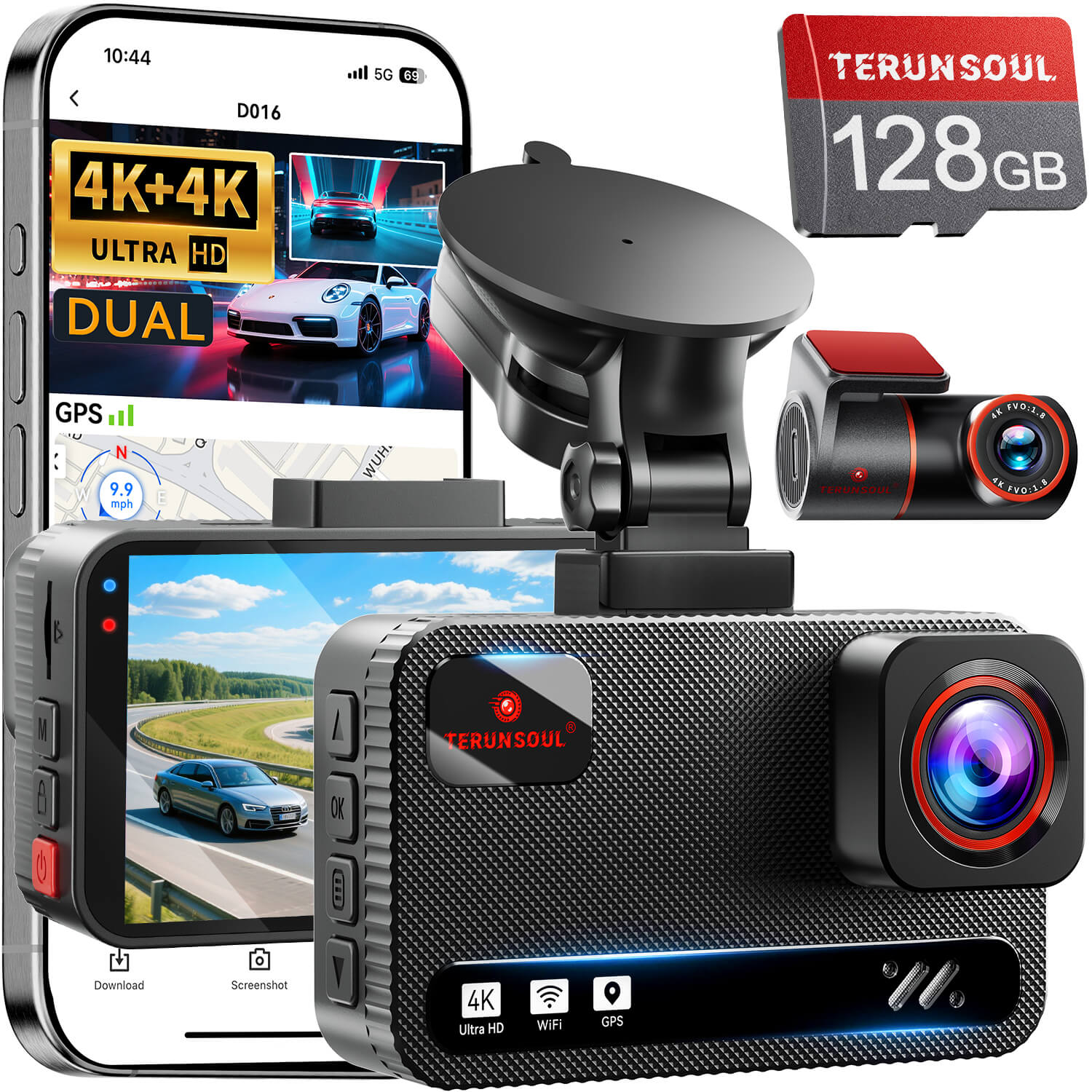
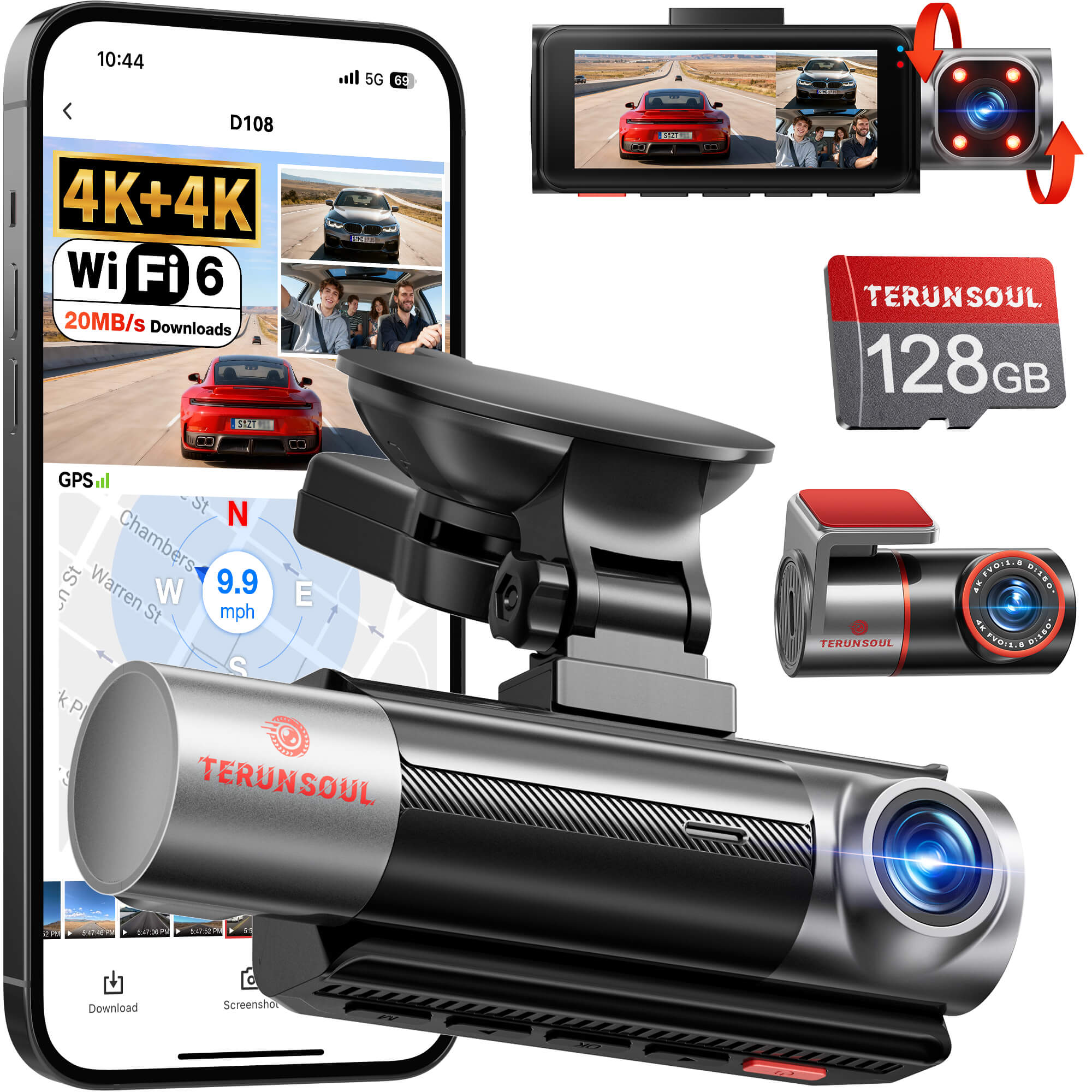
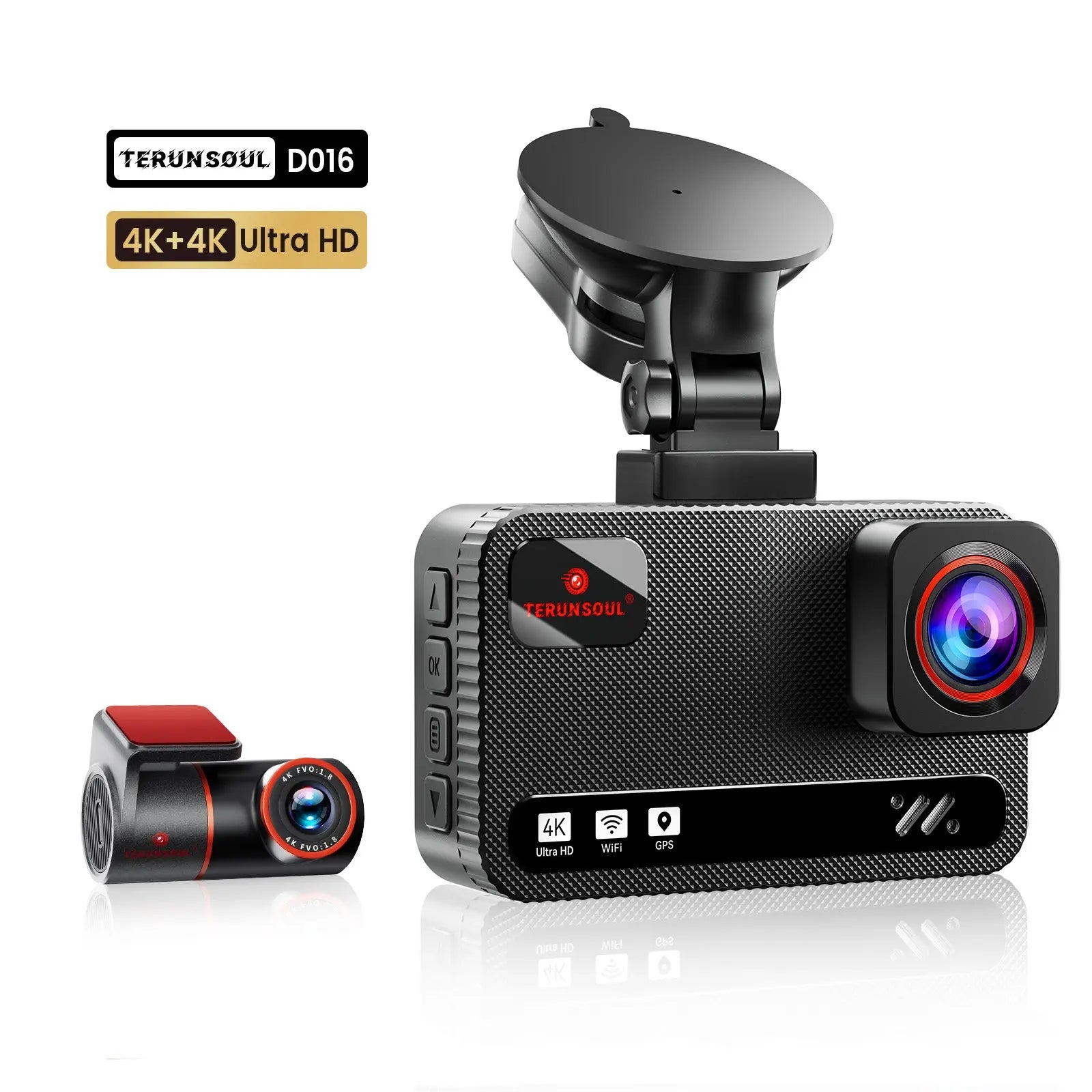
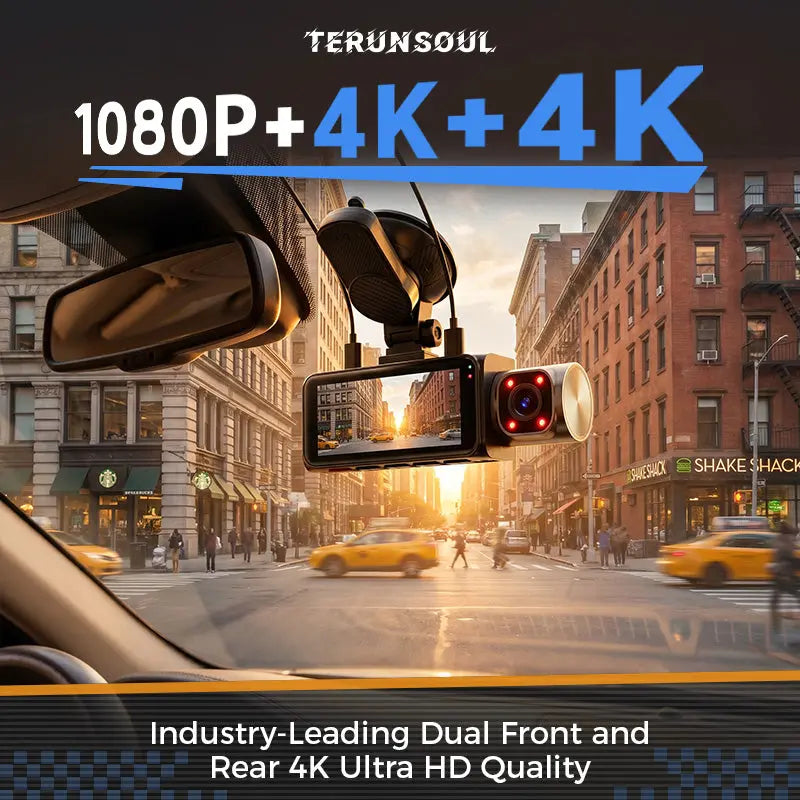
All of the risks above — being falsely accused, misunderstood, overcharged, delayed, or exploited — share one common solution: a dash cam. The Terunsoul D016 is built for exactly this. A front and rear dual 4K dash cam that costs just over $100, comes ready out of the box, and includes a free 128GB high-speed memory card can transform you from a defenseless victim into someone with irrefutable evidence.
The core features of the Terunsoul D016:
-
Front and rear dual 4K Ultra HD cameras (3840×2160P), with a 170° ultra-wide front lens and equally sharp 4K rear clarity. Whether it’s a rear-end collision, a sideswipe, or a parking lot scrape, the D016 clearly captures the other car‘s license plate and impact details.
-
F1.5 large aperture with Starlight Night Vision technology, effectively suppressing headlight glare — even at night or in dimly lit parking lots, license plates remain readable.
-
Built-in G-sensor, automatically locking footage upon impact, so critical evidence is never lost.
-
3.0-inch IPS large screen, allowing you to play back footage directly at the scene — no phone needed.
-
Dual-band WiFi supporting 5.8GHz high-speed transmission, letting you transfer 4K video to your phone in seconds, ready to show police or insurance adjusters on the spot.
-
Built-in GPS module, recording your speed and driving trajectory in real time. When scammers claim you were “speeding,” GPS data becomes your strongest defense.
Conclusion
What does no evidence mean after a car accident? It means you could be wrongly blamed for someone else’s mistake. It means your insurance premiums could rise for the next three years, costing you thousands of extra dollars. It means your claim could be delayed, reduced, or denied outright. It means you could be at a disadvantage in court, or even presumed fully at fault. And all of this could be completely avoided with a $100-plus Terunsoul D016 dash cam. It won‘t stop an accident from happening. But it will ensure that when an accident does happen, you are standing on the side of the truth.
Choose Terunsoul D016. Let every trip be backed by evidence. Let “no evidence” become a thing of the past.


Laisser un commentaire
Tous les commentaires sont modérés avant d'être publiés.
Ce site est protégé par hCaptcha, et la Politique de confidentialité et les Conditions de service de hCaptcha s’appliquent.